Destination guide
Konya: a holy city you pass through, slowly
Rumi’s tomb, a whirling ceremony if the calendar works, and a city that is devout in a way the coast is not. One night is a stop. Two is a visit. Do not treat it as a theme park of dervishes.
- 1–2 nightsTime to give it
- YHTFrom Ankara and Istanbul
- MevlanaThe tomb and museum
- ConservativeDress and evenings
Why stop in Konya
Konya is where the high-speed line, the bus network, and a lot of “Istanbul–Cappadocia–coast” itineraries quietly meet. The reason to get off is Rumi — Celaleddin Rumi, Mevlana, whose tomb sits under a turquoise dome and draws pilgrims and visitors in the same queue.
The city around it is a large Anatolian capital: industry, universities, wide roads, and a social tone that is devout. That is the interest, if you have the patience. It is also why people who wanted rooftop bars feel they have made a mistake by lunch. They have not made a mistake. They have come to the wrong night of the trip.
Use Konya as a pause, not as a highlight reel. One night between Ankara and Cappadocia, or between Cappadocia and Antalya, is the pattern that fits a first visit.
Mevlana Museum
The Mevlana Museum is the dervish lodge and the tomb. You will cover your hair if you are a woman, you will cover your shoulders, you will take off your shoes in the tomb chamber. The sarcophagus, the offerings, the quiet, are the visit. The attached rooms hold garments, manuscripts, and the usual museum overflow.
Go early. Tour groups arrive in mid-morning waves. This is a pilgrimage site that also sells tickets; behave for the first audience, not the second. Photography restrictions are posted and enforced more strictly than in a ruined theatre.
The surrounding square has tea gardens and souvenir shops. They are fine. They are not the point.
The whirling ceremony
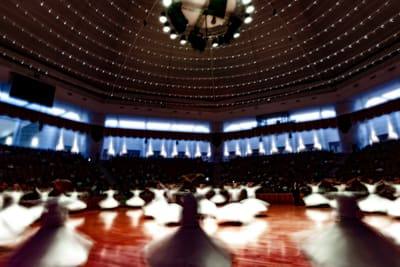
A sema is a religious ritual. In Konya you can see a scheduled version at the Mevlana Cultural Centre — seating, a programme, a genuine order of movement. December, around the anniversary of Rumi’s death, is the high season for visitors who came specifically for this.
It is not a restaurant show. Do not expect to clap along, and do not book a Cappadocia hotel “whirling night” and tell yourself you have done Konya. If the timetable does not fit your night, visit the tomb and move on. That is still a complete stop.
The rest of the city
Alaaddin Hill, the Alaaddin Mosque, and the tiled Karatay Museum are the extras if you have a second morning. Çatalhöyük, the Neolithic site, is a dedicated outing south of the city — fascinating if you care about archaeology, a dusty disappointment if you expected Göreme. Do not add it to a tight transfer day.
Eat etli ekmek — the local flatbread with meat — in a place that serves it to families at lunch. Konya is not Gaziantep, and it does not try to be. Evenings are early. Alcohol is discreet. The city will not entertain you after 10pm, and that is information, not a complaint.
Where to sleep
Stay within a walk of the Mevlana complex so the morning visit does not start with a taxi hunt. Hotels here are ordinary and often good value. Boutique restorations exist; they are not the Cappadocia cave product.
Konya hotels near the tomb beat a room on the ring road. If a sema is the reason you stayed a second night, confirm the start time before you book a dawn bus to Göreme.
On the way to somewhere
The YHT from Istanbul and Ankara is the civilised arrival. Buses to Cappadocia (Nevşehir/Göreme) and south toward Antalya run all day; the road is inland and long. See getting around Turkey.
Do not try to “see Konya” as a day trip from Göreme. You will spend it on the bus. Sleep here, then continue to Göreme as a separate stay.
Common questions
Is Konya worth visiting?
Yes as a night between Ankara or Istanbul and Cappadocia, or on the way to the Mediterranean. The Mevlana Museum is the reason. The city is large, conservative, and not a nightlife destination. If whirling dervishes are the only image you have, come for a ceremony and leave — that is an honest visit.
Can I see whirling dervishes in Konya?
At the Mevlana Cultural Centre there are scheduled sema ceremonies, more often on weekends and in December around the Urs of Rumi. They are religious performances, not dinner theatre. Check the week’s timetable before you build a night around it. Tourist ‘dervish shows’ in Cappadocia hotels are a different, thinner product.
How many nights in Konya?
One is the stopover: museum, a walk, an early bus. Two if a sema falls on the second evening or you want the tiled Alaaddin hill and a slower pace. Three is for people with a specific interest in the Mevlevi order, not for a first Turkey loop.
Is Konya conservative? What should I wear?
More conservative than Izmir or Antalya. Cover shoulders and knees in the city, and follow mosque dress rules at the tomb. Alcohol is less visible. You will be fine if you behave like a guest in a religious city rather than like a beach holiday that took a wrong turn.
Konya or Cappadocia if I am short on time?
Cappadocia. Konya is a meaningful stop on the way, not a replacement for valleys and cave hotels.
Last reviewed September 2026. Prices, visa rules and opening times change — check official sources before you book.
Keep planning