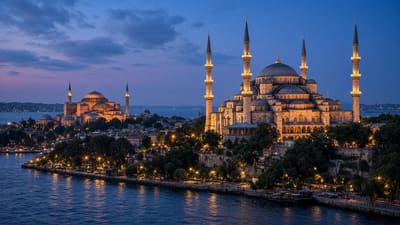
Destination guide
Istanbul: the first three or four nights of any Turkey trip
Mosques, ferries, late food, and a city split across two continents. Here is how long to give it, where to sleep, and what to skip.
- 3–4 nightsTime to give it
- Apr–Jun, Sep–OctBest months
- IST & SAWAirports
- IstanbulkartTransport pass
How many days do you need in Istanbul?
Three to four nights. That is the honest answer for a first visit, and it is the number the rest of a Turkey itinerary should be built around. Istanbul is not a city you "do" in a long weekend and tick off — but it is also not a place where a fifth and sixth day unlock something the first four did not, unless you have a specific interest.
A workable shape for three full days:
- Day one — Sultanahmet. Hagia Sophia, the Blue Mosque, the Basilica Cistern and Topkapı Palace sit within ten minutes of each other. That is a full day, and it is the most crowded day you will have.
- Day two — Galata and Beyoğlu. Cross the Galata Bridge, walk up to the tower, then İstiklal Caddesi and down through Karaköy. Finish with dinner somewhere with a view back at the old city.
- Day three — the water. A Bosphorus ferry north, lunch somewhere on the strait, then the Asian side at Kadıköy in the late afternoon.
The mistake most itineraries make: giving Istanbul two nights and Cappadocia three. Flip it. Cappadocia is a landscape you can see properly in two days; Istanbul is a city, and cities need time you are willing to waste.
Where to stay in Istanbul
Istanbul is enormous and the traffic is genuinely bad, so the neighbourhood matters more than the hotel. Three areas cover almost everyone:
- Sultanahmet
- The monuments are outside your door and you can be at Hagia Sophia before the tour groups. Quiet at night, and the restaurants are aimed squarely at visitors.
- Galata / Karaköy
- The best compromise. Walkable to the old city over the bridge, but with bars, coffee and restaurants that locals use. Hilly — check how far uphill your hotel really is.
- Kadıköy (Asian side)
- Cheaper, younger, excellent food, and a ferry commute that is a pleasure rather than a chore. Best on a repeat visit or a longer stay.
Wherever you land, check the hotel is genuinely walkable to a tram or metro stop. A place that looks central on a map but sits fifteen minutes uphill from the nearest station will quietly cost you an hour a day. If you are still weighing the whole trip's budget, the cost of a Turkey trip breaks down what accommodation actually runs in each region.
What to actually see
Hagia Sophia is the one unmissable building. It has been a cathedral, a mosque, a museum, and is a mosque again — and that layered history is legible in the room itself, with Byzantine mosaics and Islamic calligraphy sharing the same dome. It is an active place of worship: shoulders and knees covered, shoes off, and a headscarf for women.
Topkapı Palace rewards a timed ticket and a half-day. The Harem is a separate ticket and is the better half of the visit. The Basilica Cistern is short, cool and strange — an underground forest of columns — and works well as a break from the heat.
The Blue Mosque (Sultan Ahmed) is free, working, and beautiful, with the same dress rules. Check prayer times before you walk over; it closes to visitors around them.
Beyond the headline list, the two most rewarding hours in Istanbul are often unplanned: the streets of Balat, with their painted houses and antique shops, and the fish market lanes off Kadıköy.
The Bosphorus and the Asian side
You should get on the water at least once. The cheapest and best version is not a tour — it is a public ferry, paid for with the same Istanbulkart you use for the tram, running up the strait past the palaces and the fortress. A full Bosphorus cruise takes most of a day; the shorter commuter hops give you the same views in ninety minutes.
Crossing to Kadıköy costs almost nothing and takes twenty minutes. It is the single best-value thing you can do in the city: a different Istanbul, with the produce market, the bar streets around Kadife Sokak, and a skyline view back at the old city on the return trip.
Getting in from IST and SAW
Istanbul has two airports and they are on opposite sides of the city.
- Istanbul Airport (IST) — the big one, on the European side, well north of the centre. The M11 metro connects it to the city, and the airport bus network (Havaist) runs to the main districts. Allow an hour to the old city, more in traffic.
- Sabiha Gökçen (SAW) — on the Asian side, used heavily by low-cost carriers. The M4 metro now reaches it. If your hotel is in Sultanahmet, factor in a genuinely long transfer.
Book your onward domestic flight from whichever airport matches your hotel, not whichever is cheapest by a few pounds — crossing Istanbul to save twenty pounds is a bad trade. More on domestic routes in getting around Turkey.
Get an Istanbulkart from a machine at the airport or any station the moment you arrive. One card can be topped up and shared between travellers, and it covers the metro, tram, bus, funicular and ferries.
Eating well
The best rule in Istanbul is to eat away from the sights. A ten-minute walk from Sultanahmet halves the price and doubles the quality. Look for esnaf lokantası — everyday canteens with trays of home-style dishes behind glass, where you point at what you want.
Worth going out of your way for: a proper breakfast spread (serpme kahvaltı) somewhere that takes it seriously, balık ekmek by the water at Eminönü, and baklava from a dedicated shop rather than a restaurant dessert menu.
On taxis: insist on the meter, or use a ride-hailing app so the price is fixed before you get in. This is the single most common way visitors get overcharged in Istanbul, and it is easily avoided.
Common questions
How many days do you need in Istanbul?
Three full days covers Sultanahmet, the bazaars, Galata and one Bosphorus trip without rushing. Four lets you add Kadıköy or Balat properly. Two is enough only if you accept you are seeing the headline sights and nothing else.
Is Istanbul the best place to start a Turkey trip?
For most people, yes. Long-haul flights land there, both airports connect onward to Cappadocia and the coast, and it is the one city where jet lag does not matter much because so much of it is walking and looking.
Where should I stay in Istanbul for the first time?
Sultanahmet if you want the monuments on your doorstep and an early start. Beyoğlu, Galata or Karaköy if you want the city to keep going after dinner. Both are walkable; the choice is really about what you want your evenings to look like.
Do you need to book Hagia Sophia and Topkapı in advance?
For Topkapı Palace, yes — timed tickets sell out in high season. Hagia Sophia is an active mosque with a separate paid gallery route for visitors; go early or late to avoid the longest queues, and dress for a mosque either way.
Is the Grand Bazaar worth visiting?
As a building, absolutely — it is a covered city block of vaulted lanes. As a shop, only if you enjoy bargaining. The Spice Bazaar is smaller and easier, and the streets between the two are where locals actually buy things.
Last reviewed September 2026. Prices, visa rules and opening times change — check official sources before you book.
Keep planning