Planning guide
Cappadocia weather: high, dry, and harder on balloons than brochures admit
This is a plateau, not a beach. Summers are hot and bright. Winters are properly cold. Balloons cancel for wind on beautiful mornings. Build a spare sunrise.
- Apr–Jun, Sep–OctBest walking & flying
- Jul–AugHot afternoons
- Dec–FebSnow, more cancellations
- DawnAlways colder than town
This is plateau weather
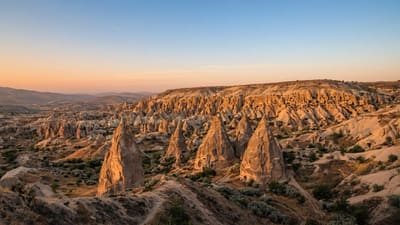
Cappadocia sits inland, high, and in a dry continental climate. That means hot, bright summers, cold winters, and a swing between day and night that catches people who packed for Antalya. The valleys are pale rock with little shade. Dawn is always colder than breakfast on the terrace an hour later. Wind is a flying problem more than a walking problem, until it is both.
The national overview is on Turkey weather by month. Istanbul’s damp cold and the coast’s swimming season do not apply here. If your trip includes both, you are packing for two countries. Istanbul weather is the other half of that suitcase.
There is no useful sea temperature. There is a useful balloon statistic, and it is not printed on the hotel card.
When balloons actually fly
Flights go at dawn, in low wind, or they do not go. Turkey’s aviation rules ground the field when conditions are unsafe. Operators do not “try anyway.” A clear sky is not permission.
June–September is the most reliable stretch. December–February is closer to a coin toss, with snow adding its own delays. April, May and October sit in between: enough good mornings to be worth booking, enough cancellations to make a second night the insurance. The practical booking advice — spare morning, licensed operator, refund in writing — is on the hot air balloon page.
Watching from a Göreme or Uçhisar viewpoint does not cancel as often as a ticket. If flying is a maybe, the ground show is still a 5:30am alarm and still worth it on a still morning.
Do not make the balloon the only reason for the date. Pick a month that is also good for walking, then check balloon dates for the mornings you will actually be in Göreme. A reclear only works if you are still in town.
Season by season
March and April
The plateau greens up. Days can be gorgeous and still drop to coat weather after dark. April is when a lot of people arrive for “spring balloons” and meet wind. Walk the valleys anyway; they are at their least dusty. Rain is possible and turns paths slippery.
May and June
The first best window. Warm days, cool dawns, long evenings. June is busier. This is when cave terraces earn the photographs. A balloon layer is still required at 5am — you will laugh at the T-shirt you almost wore.
July and August
Peak heat. The valleys and the open-air museum at midday are a poor idea. Walk at first light, hide at lunch, go out again when the rock stops radiating. Balloons still fly more often than in winter. Hotels fill. If this is your only slot, it is workable and it is not the nicest version of the place.
September and October
The other best window. September is still warm; October turns gold and quieter. Flying weather is generally friendlier than spring, then becomes mixed as autumn storms show up. Pack a layer for the evening terrace.
November
Shoulder into winter. Some restaurants in Göreme thin out. Prices drop. Balloons become less certain. The light can be superb. A good month if you accept uncertainty and like having a valley to yourself.
December to February
Snow is possible and, when it lies on the chimneys, is the argument for coming. It is cold. Some cave rooms feel damp; heating quality varies wildly — read winter reviews, not summer ones. Balloon cancellations are common. Roads to Kayseri can be slow. Underground cities are the same temperature they always are, which will feel like a gift.
What to pack
- Walking shoes with grip. Volcanic dust, loose gravel, occasional ice. Trainers with a smooth sole are how people sit down unexpectedly.
- Sun protection that assumes no shade and pale rock. A hat you will actually wear.
- A warm layer for every dawn of the stay, including June. Fleece or light down beats a city blazer.
- In winter: a real coat, gloves, hat, and shoes you trust. Cave hotels are not uniformly snug.
- Modest clothes for villages and churches; shoulders and knees still matter in places that are not Göreme’s tourist core.
You do not need a cocktail dress. You need to walk Pigeon Valley and stand still in a basket at minus-feeling o’clock. If the same bag did Istanbul first, you already have the mosque kit; add the warm layer and the shoes.
Hotels and the spare night
Weather does not change the town decision much: Göreme first, Uçhisar if you want quieter views. It does change the room decision. In summer you want a terrace and working air-conditioning for the afternoon. In winter you want heating that recent guests mention, and a window if you hate cave-dark. The checklist is on Cappadocia cave hotels.
The spare night is a weather policy. Two nights is the working minimum; three if the balloon matters. One night plus a dawn flight plus a noon departure is how cancellations become the whole story of Cappadocia.
Göreme’s hotel list is the search to use — not a vague “Cappadocia” pin that puts you in a Nevşehir suburb with a long taxi to the valleys and the launch.
Common questions
What is the best month to visit Cappadocia?
May, June and September are the strongest: walkable valleys, a decent balloon success rate, long evenings on a terrace. April and October are cheaper and greener or goldener, with more mixed flying weather. July and August work if you walk at dawn and rest at midday. December–February is for snow photographs and a flexible balloon attitude.
When do Cappadocia balloons get cancelled?
Any morning the wind is wrong — including clear, photogenic mornings. Winter and early spring see the highest cancellation rates. Summer is more reliable and still not a guarantee. That is why a one-night stay is a bad balloon plan. Reputable operators refund or rebook; read that line before you pay.
Does it snow in Cappadocia?
Yes. December through February is the usual window, sometimes into March. The valleys under snow are one of the best sights in Turkey. Roads can be messy, some cave rooms feel damp, and flights cancel more often. Pack real shoes and a coat, not a city parka you wear twice.
How hot is Cappadocia in summer?
Afternoons in July and August commonly sit in the mid-to-high thirties Celsius, with little shade in the valleys and at the open-air museum. Mornings and evenings are the usable parts of the day. The altitude takes the edge off the nights; it does not save you at 2pm on pale rock.
What should I pack for Cappadocia?
Walking shoes with grip, sun protection, a warm layer for dawn (balloon or viewpoint) even in June, and modest clothes if you visit working towns and churches. In winter: insulated coat, hat, gloves, and shoes you trust on frost. Cave hotels are not evenly heated — read recent winter reviews.
Last reviewed September 2026. Prices, visa rules and opening times change — check official sources before you book.
Keep planning